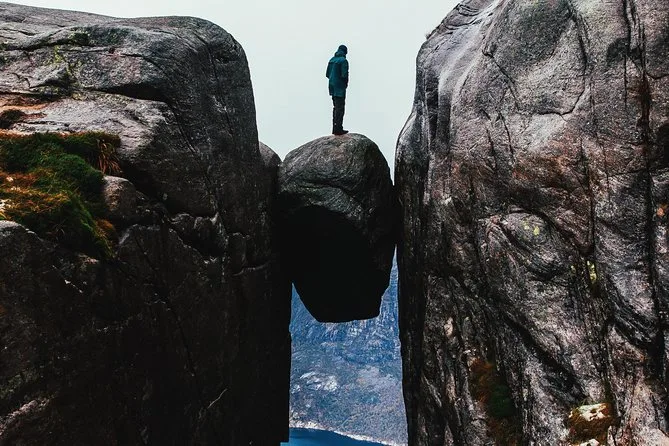
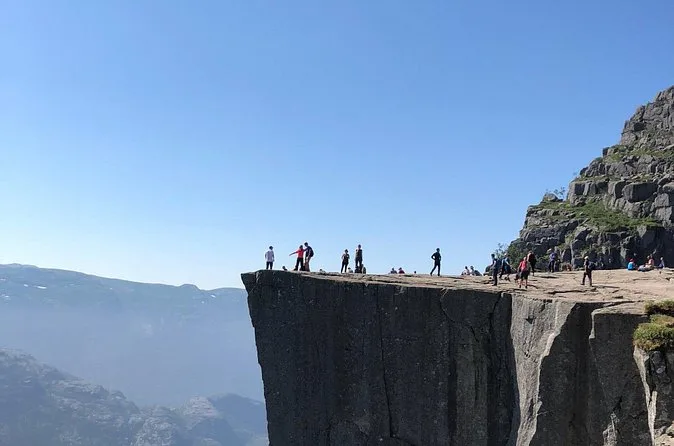
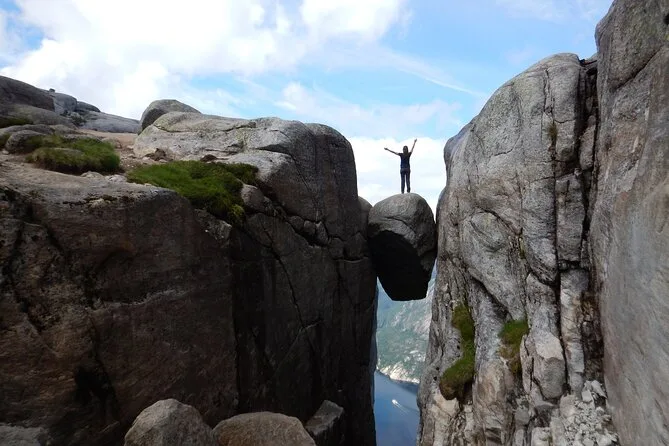
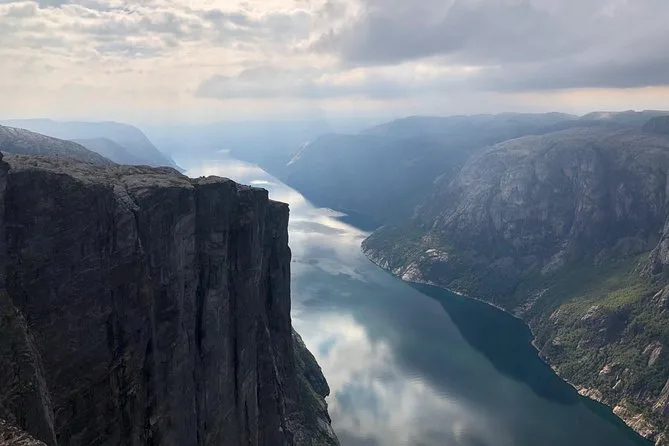
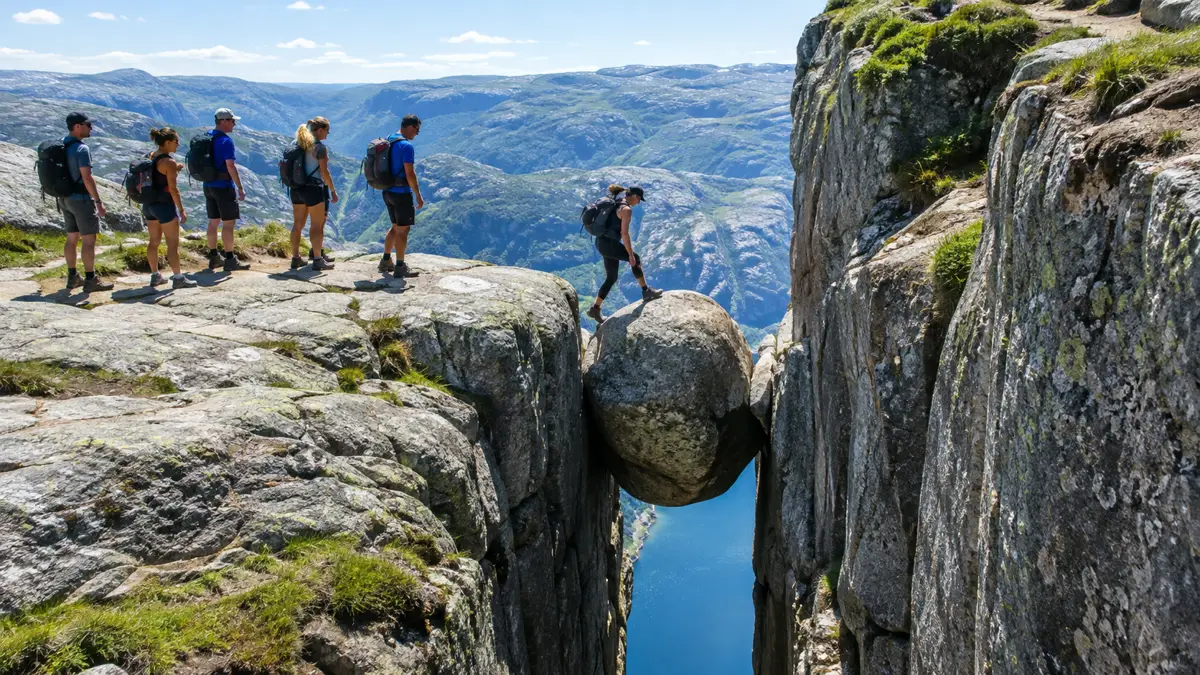
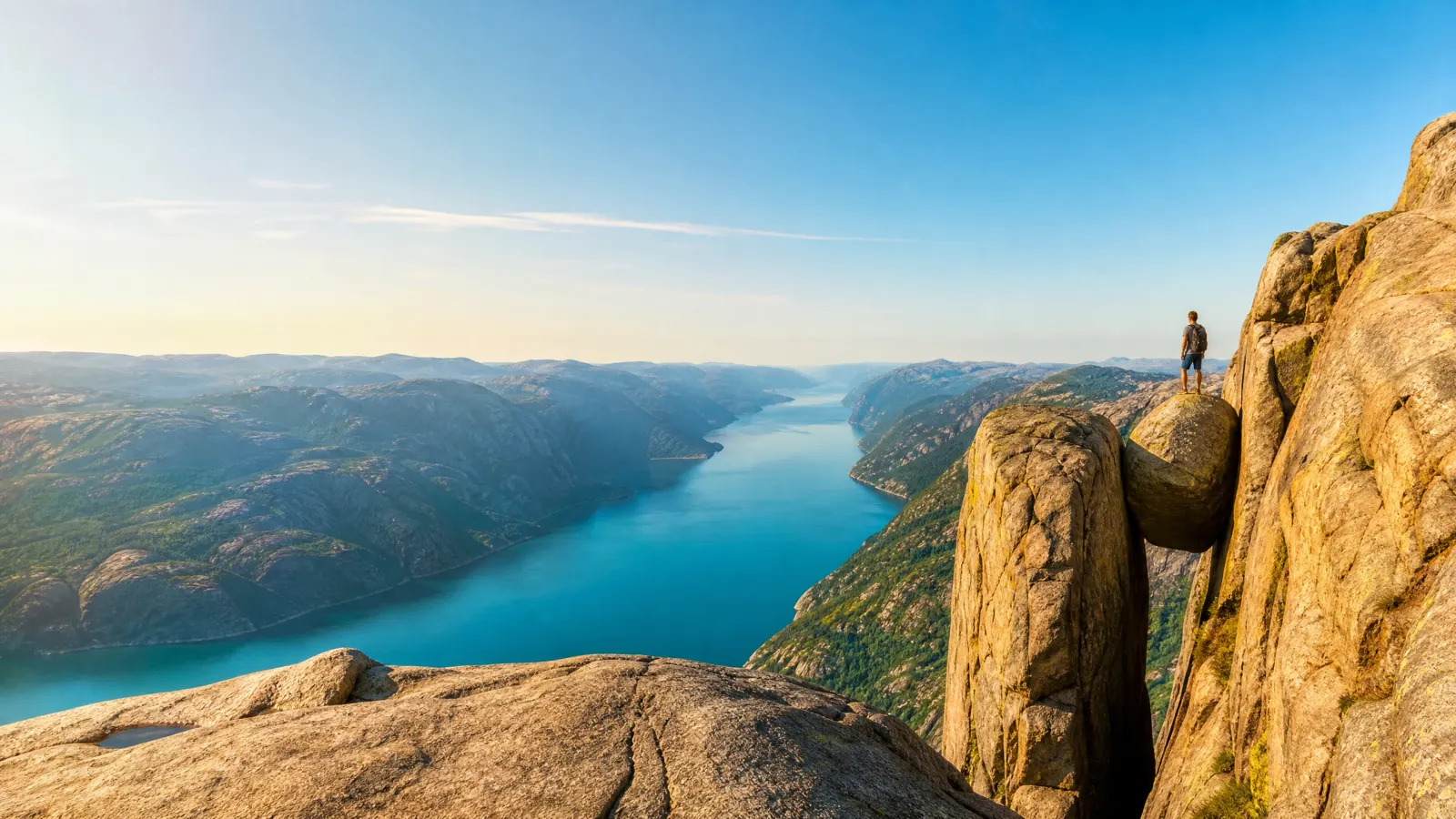
A boulder wedged in a crack of the Kjerag cliffs, nearly 1,000 metres above Norway's Lysefjord.
Haul yourself up three granite ridges on chains, cross a plateau of bare rock and mountain pools, then step out over the drop.
The real difficultyDistance, climbs and chains, spelled out
Every option side by sideDay hikes, overnight trips and fjord boats
Free cancellationUp to 24 hours before, on every day tour
Small groupsEight hikers at most on the top two tours
Tours
Choose your Kjerag tour
In the centre, the guided hike with the most reviews: eight hikers at most and pickup at your hotel. Either
side, a small group rated 5.0 with the parking paid, and a newer local outfit. Every card opens a full tour page.
A licensed guide, an air-conditioned van through the Hunnedalen valley and the trailhead parking fee paid for you. Guests praise the pace and warn the breaks are short.
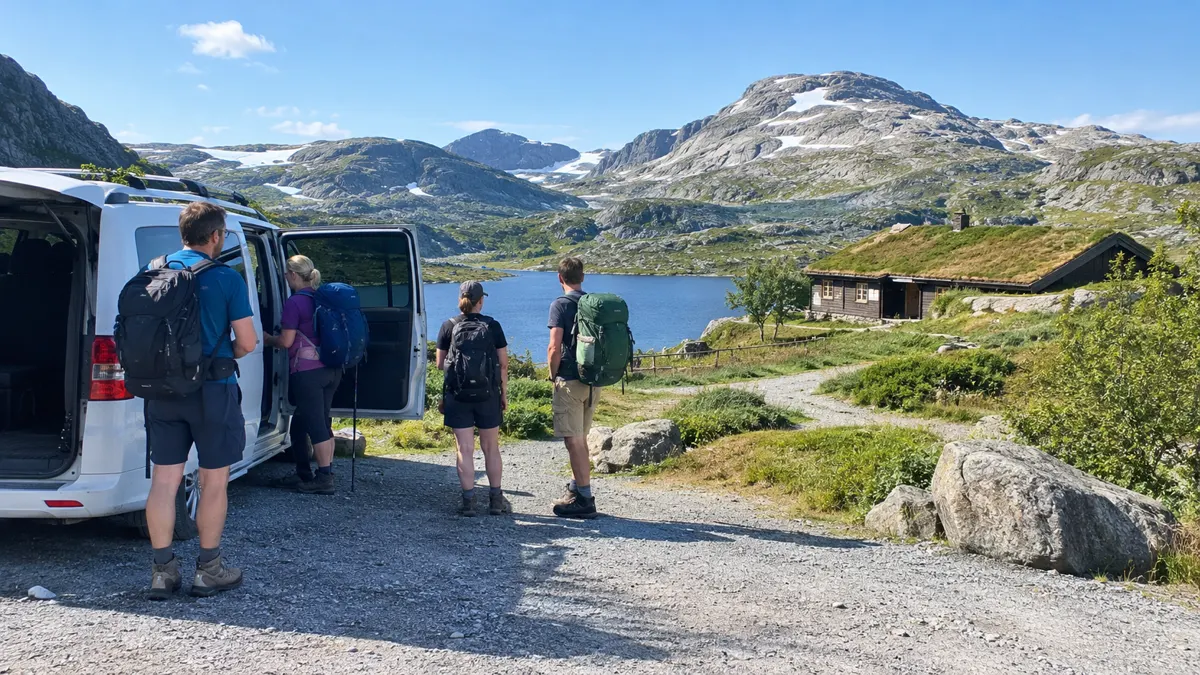
A guide collects you at your Stavanger hotel or Airbnb, drives the 2.5 hours out and walks all three climbs with you. Groups stop at eight; lunch is yours to pack.
What's included
Pickup at any Stavanger hotel or Airbnb, from 7:00
Round trip by private vehicle, about 2.5 hours each way
A newer and shorter day with Lysekammen, a local guiding outfit, in a black minibus of up to 15 hikers. No Viator reviews yet, so you are among the first.
What's included
Transport by air-conditioned minibus from Stavanger
Day hikes leave Stavanger at about 7:00 and get back in the evening. Lunch is not included on any
of them, so pack it. On your own, the Kjerag Express Bus costs NOK 995 return. The RIB safari was on sale for about $127 when we checked.
Before you book
Eleven kilometres, three climbs, one boulder.
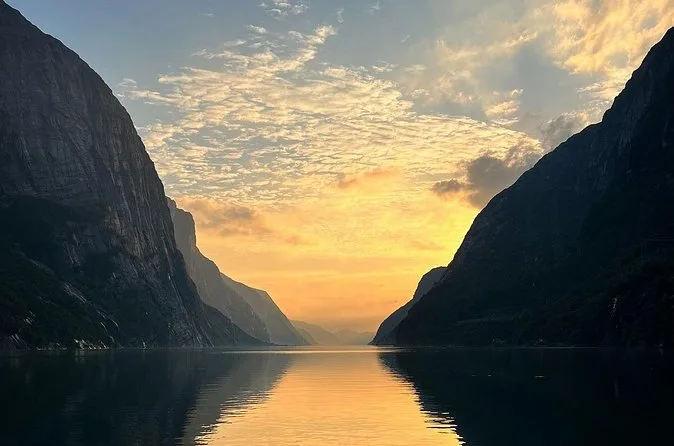
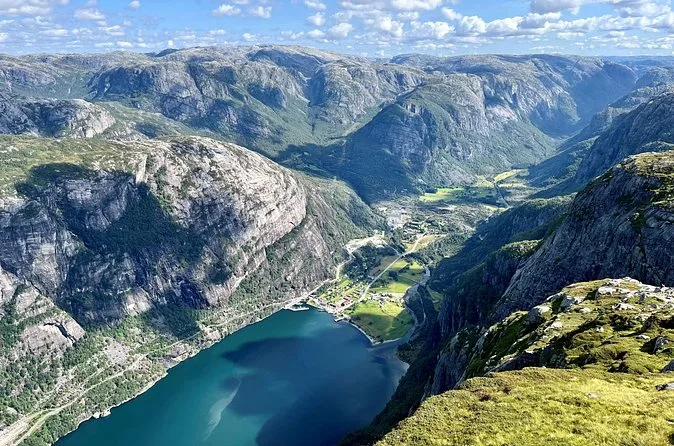
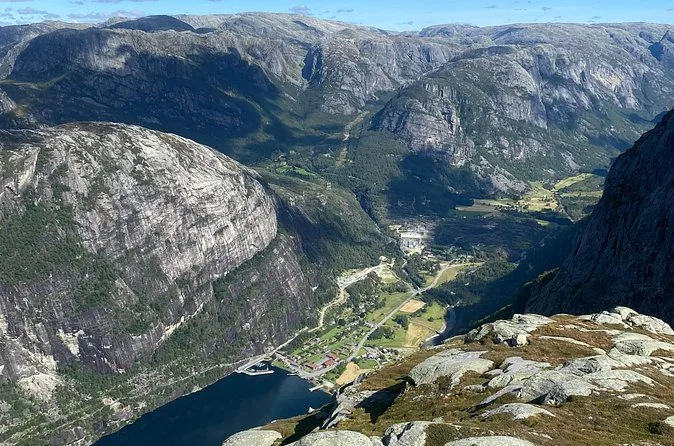
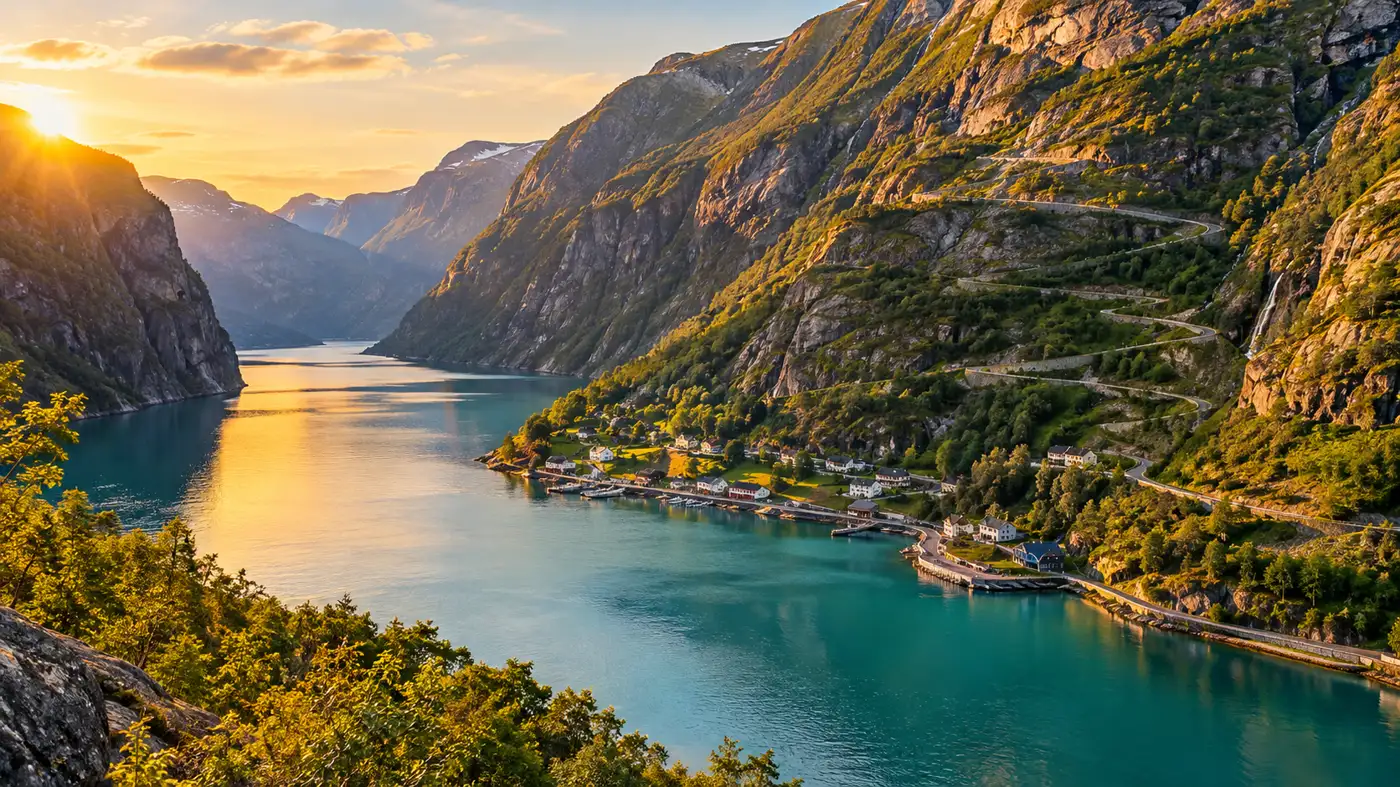
Kjerag sits at the far, inner end of the 42 km Lysefjord, above the village of Lysebotn. The trail starts at
Øygardstøl, a car park and café at the top of a road with 27 hairpins, and runs about 11 km there and back over smooth
granite. Three steep climbs, two dips into valleys and a long plateau of rock and pools bring you to a crack in the
cliff edge with a boulder jammed in it.
Two things surprise people. The first: it is far. From Stavanger the road takes 2.5 to 3 hours each way, which
is why every guided day runs 9 to 11 hours. The second: the boats don't get there. The Lysefjord cruises and RIB
safaris from Stavanger turn at the Hengjanefossen waterfall, and even from the boats that do reach Lysebotn you can't
see the boulder. To stand at Kjeragbolten, you walk.
984
Metres of drop usually quoted below the boulder. It hangs over a
cleft in the cliff, not straight over the water, and stepping onto it is optional.
Guided day hikeExpress busOvernight tripFjord boats
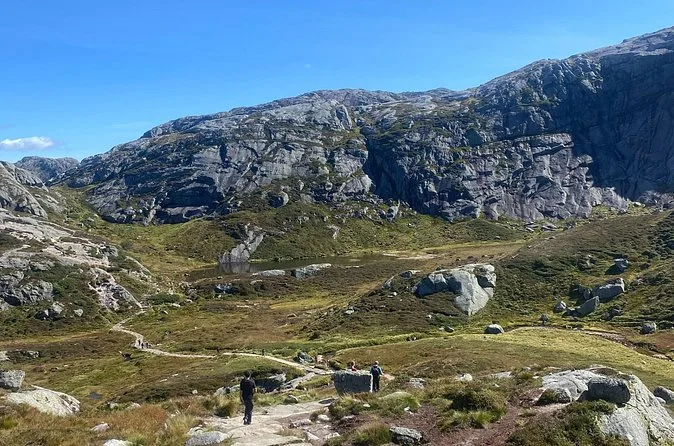
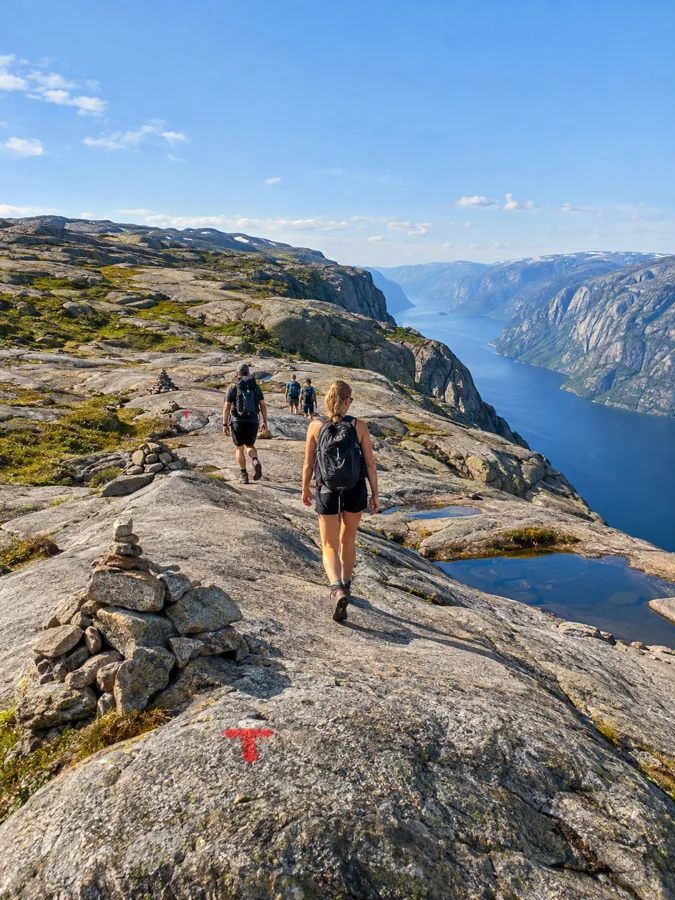
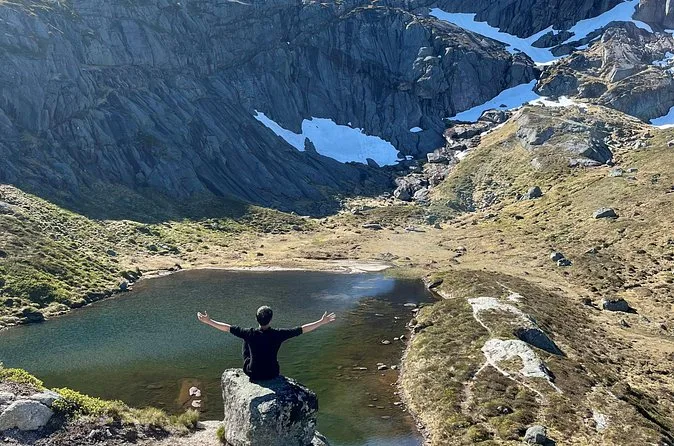
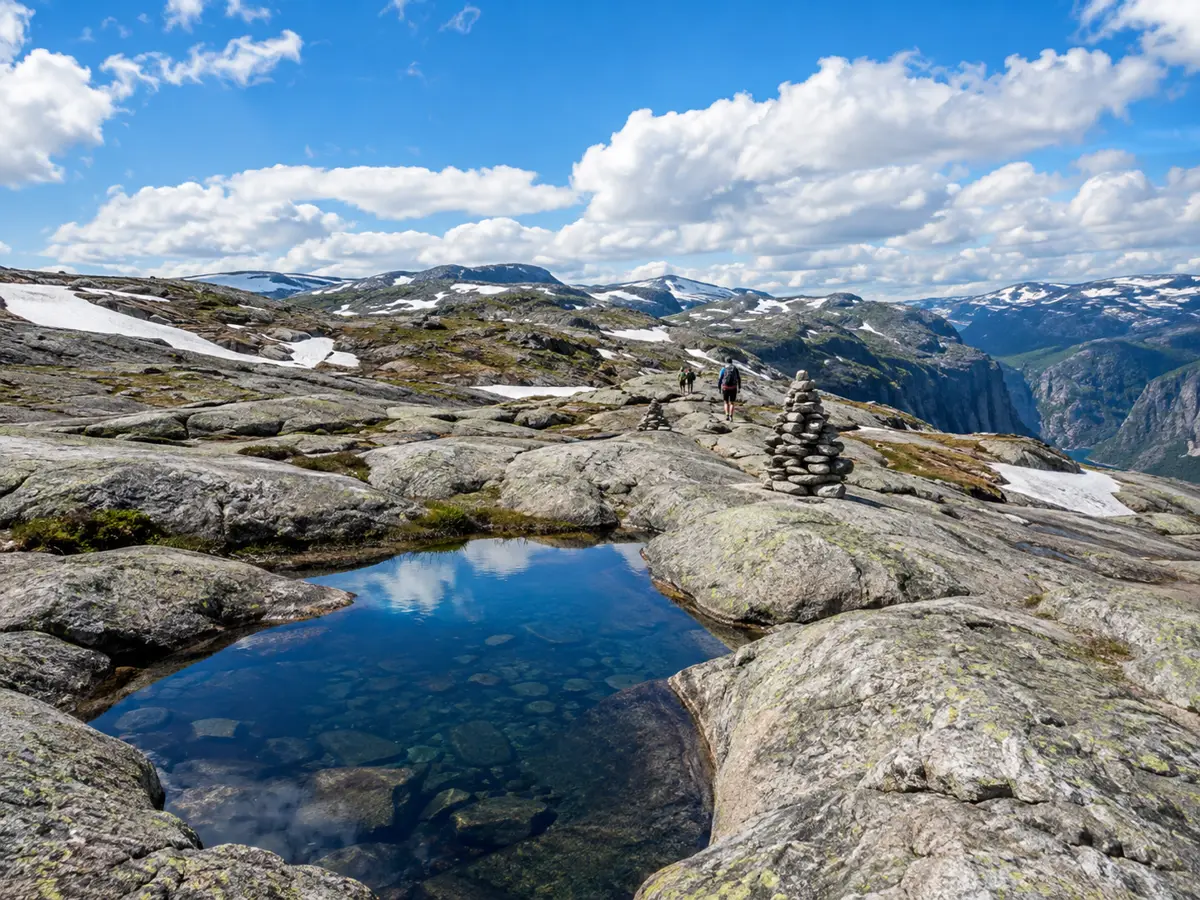
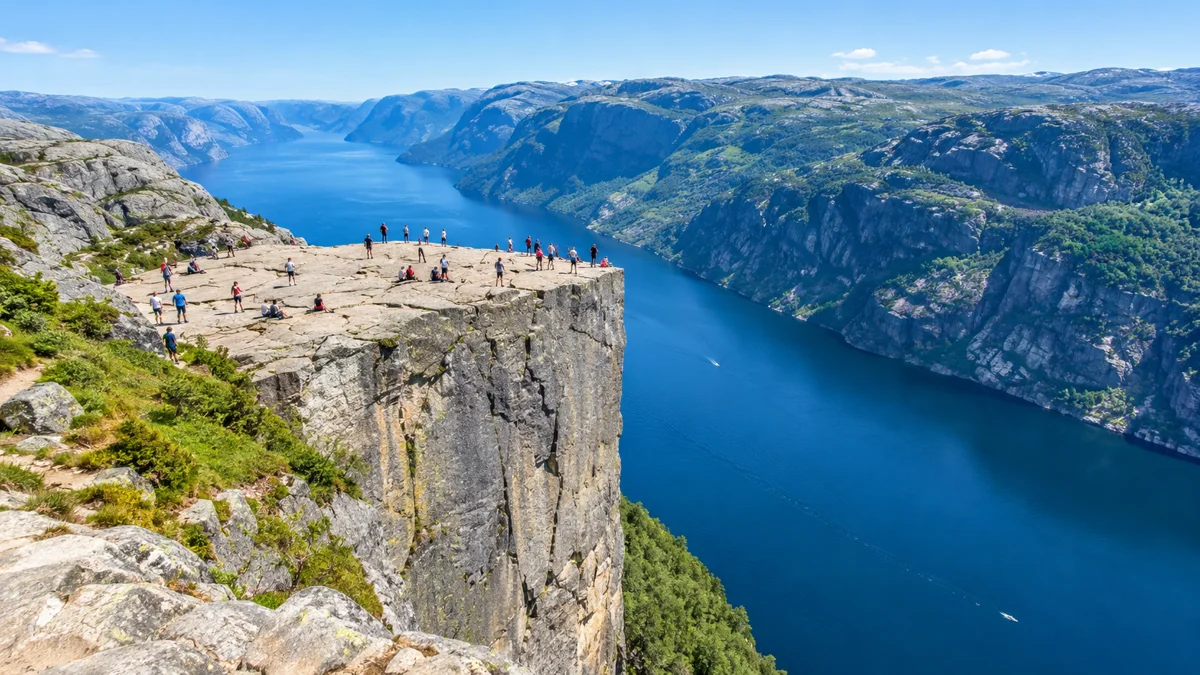
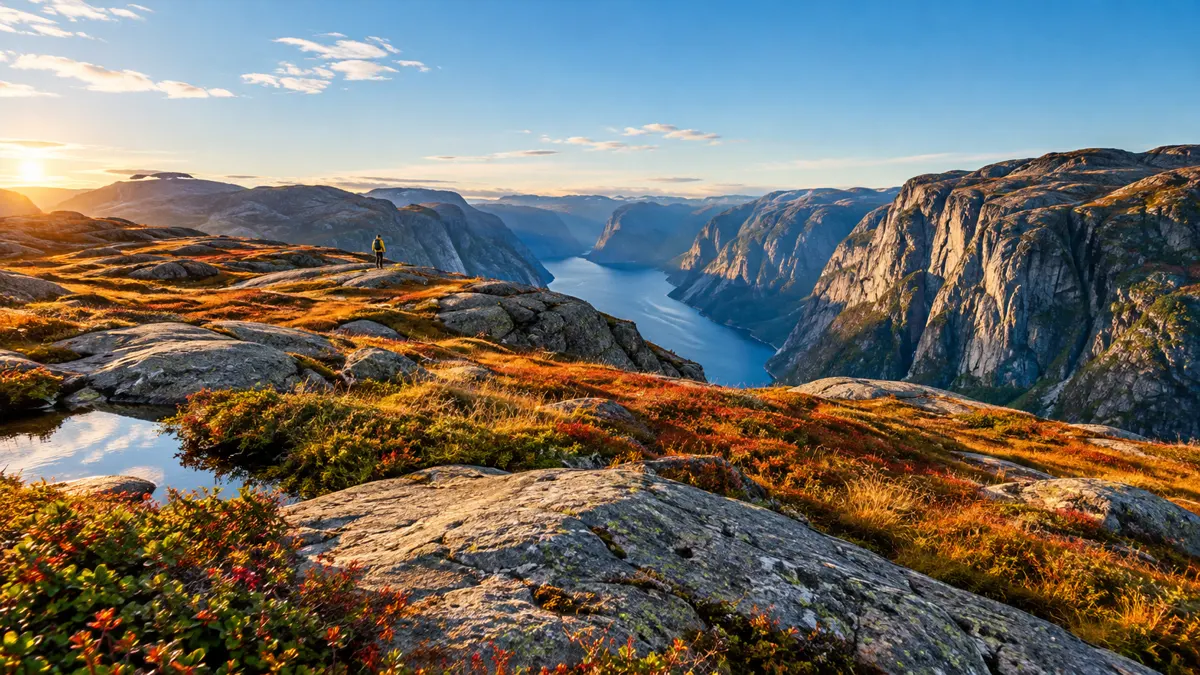
The Kjerag plateau: bare granite, cairns and pools at about 1,000 metres.
01
Can I see it by boat?
No. Stavanger cruises turn at Hengjanefossen, and the boulder is not visible from the water.
02
When can I go?
About June to September, while the mountain road and the express bus run.
03
How fit?
Fit enough for 11 km and three steep climbs: 5 to 7 hours on foot.
04
Who should skip it?
Anyone with heart, back or knee trouble, real fear of exposed rock, or small children.
Your day
How a Kjerag day runs
Nine to eleven hours from Stavanger on a guided tour, most of it on your feet. This is the shape of it.
01
Pickup in Stavanger
Your guide collects you at about 7:00 and drives inland through the mountains to Øygardstøl at the top of the Lysebotn road.
About 2.5 hours
02
Three climbs up
Straight from the car park the first ridge starts, with chains on the steep slabs. Two more climbs follow, each after a dip into a valley.
2.5 to 3 hours
03
The plateau and the boulder
Lunch on the rock, photos at the cliff edge and, if the rock is dry and you want it, the step onto Kjeragbolten.
30 to 60 minutes
04
Down and home
The way back climbs too: both valleys again, then the chains downhill. Back in Stavanger in the evening.
TrailheadØygardstølAbout 640 metres up, with parking, toilets and a café at the top of the Lysebotn road.
DistanceAbout 11 kmThere and back on the same marked trail.
On foot5 to 7 hoursThe official estimate is about six hours, breaks extra.
From Stavanger2.5 to 3 hoursEach way by road, or 2.5 hours by ferry to Lysebotn.
SeasonJune to SeptemberRoughly, while the road and the bus run.
Refund24 hoursFree cancellation up to a day before on every day tour here.
Where it happens
Where the trail starts
Øygardstøl, above Lysebotn
Kjerag car park, Øygardstøl, Fv500 Lysevegen, Sandnes municipality, Rogaland
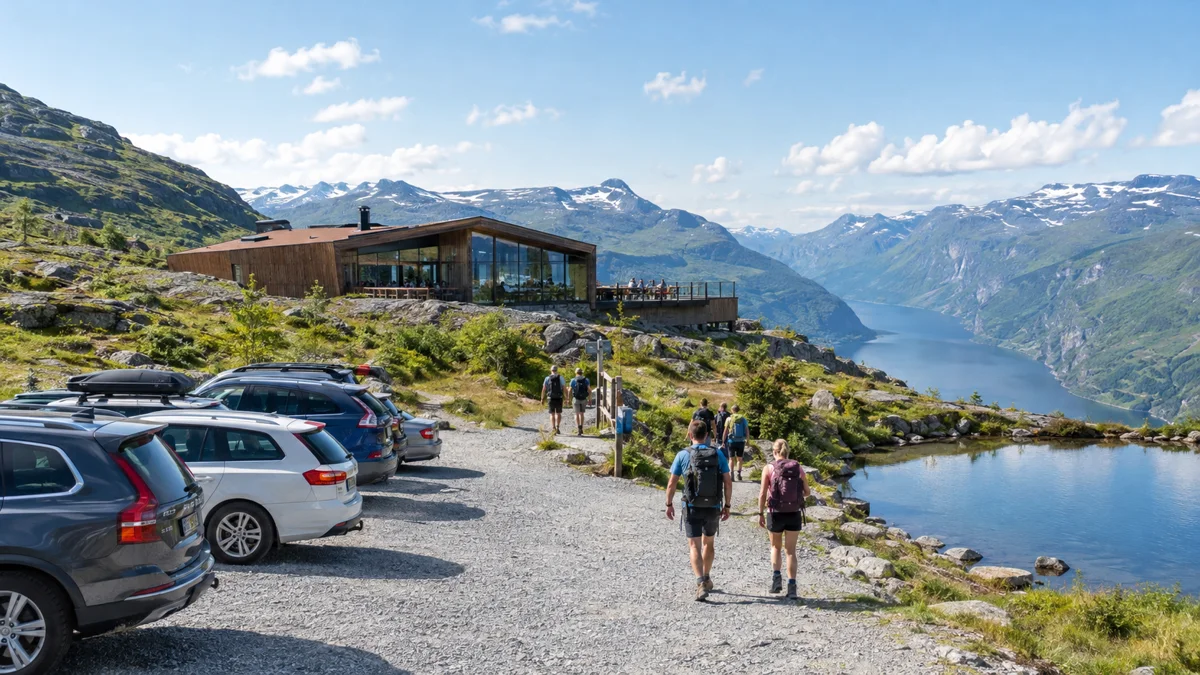
The hike starts at Øygardstøl, where the mountain road tops out before it twists 27 times down to Lysebotn. There is a
paid car park, toilets and the Ørneredet café with a view straight down the fjord. Guided tours drive you here from
Stavanger; the express bus stops here in summer; from the Lysebotn ferry a shuttle climbs the hairpins.
From Stavanger by road: 2.5 to 3 hours
Kjerag Express Bus: out at 07:45, back at 16:30
Lysebotn ferry quay: shuttle up the hairpins, NOK 250
Our guide chose the best route up, looked after everyone and ensured we got some great photos at the top. Weather was amazing, blue skies, but the hike is worth doing in any weather.
★★★★★
We were a small group (5 people) and our guide Erlend was fantastic. The hike is challenging in parts because it is very steep, but it's worth it. A fun experience and incredible views.
★★★★★
This was the hike that got me into hiking. It was my first hike ever but the scenery was amazing. I struggled physically and my legs were tired after, but it was totally worth it!
★★★★★
We are an old couple, the guide helped my wife all the way up and down the mountain. Without his help, my wife would not have made the trip. Thank you.
★★★★★
Our guide Stephan was an expert, he knew every detail of the hike. The tempo of trail was perfect. He anticipated the difficult part and gave plenty of warning, and lent you a hand just when you needed it.
★★★★★
The hike was challenging but hiking as a group made the whole experience better. Toa is an amazing guide. He is knowledgable of the trails and super helpful along the way. And he takes great pictures!
★★★★★
Difficult hike, do your research before you go. We have had a great guide, Teo, who has been very friendly and helpful throughout. Beautiful once you are up.
★★★★★
It's hard trek but worth it. Double check weather before you go. Guide was amazing and took great care of us. He was very educational and knowledgeable.
★★★★★
Had an amazing time during this hike. Weather was not very good in the beginning, but it improved around 12h. Views from top of the cliff were incredible.
Rest day
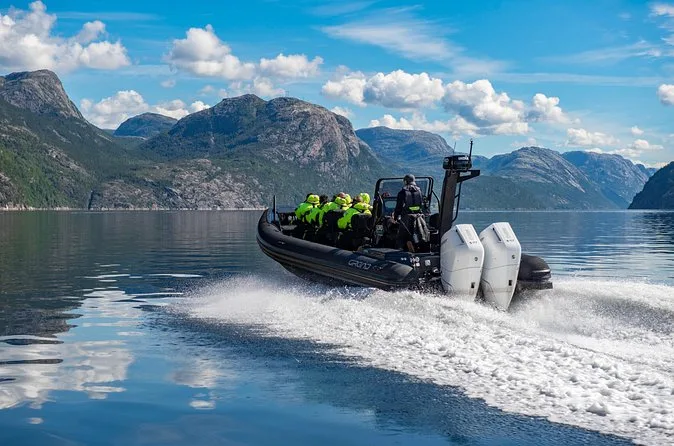
See the Lysefjord from the water
A gentle day after the hike, or a plan for whoever in your group won't do it.
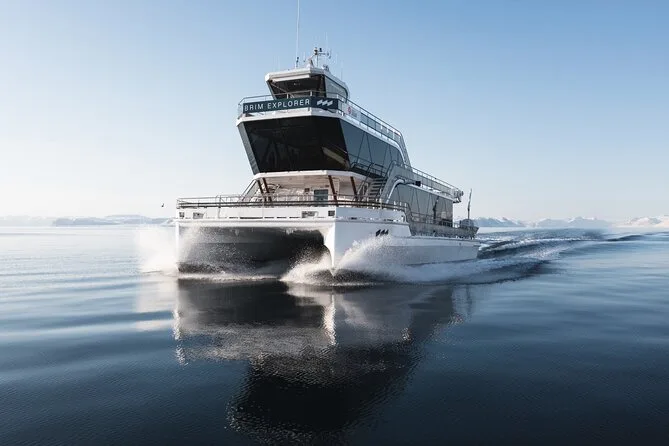
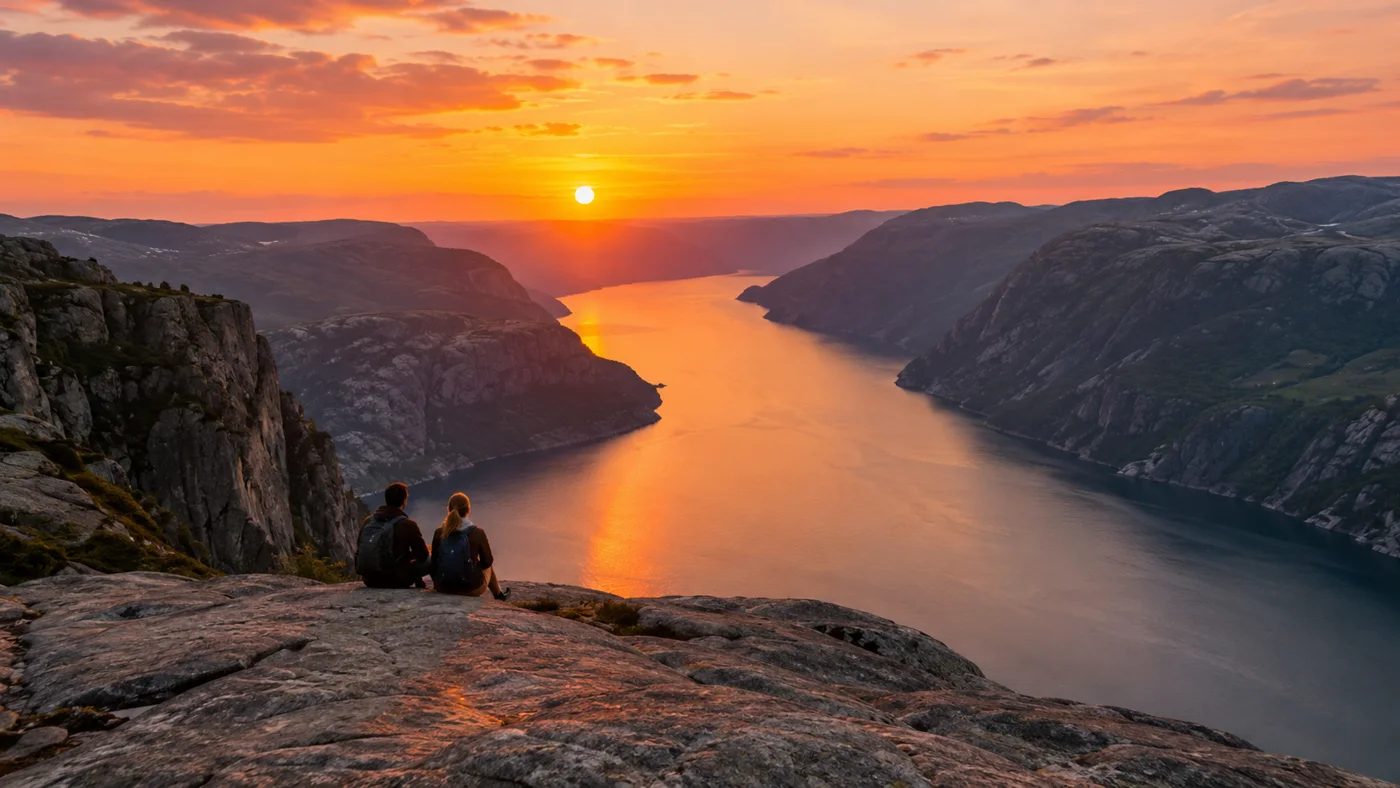
Not up for an 11 km mountain day, or a travel partner who isn't? This quiet hybrid boat leaves from the Stavanger harbour and sails into the Lysefjord below Pulpit Rock to the Hengjanefossen waterfall. It does not go as far as Kjerag, and nobody on board will tell you otherwise. Book it for a rest day after the hike.
Kjerag gets about 50,000 hikers a year, and most of them only know one photo. Here is the rest of the day.
The trail, climb by climb
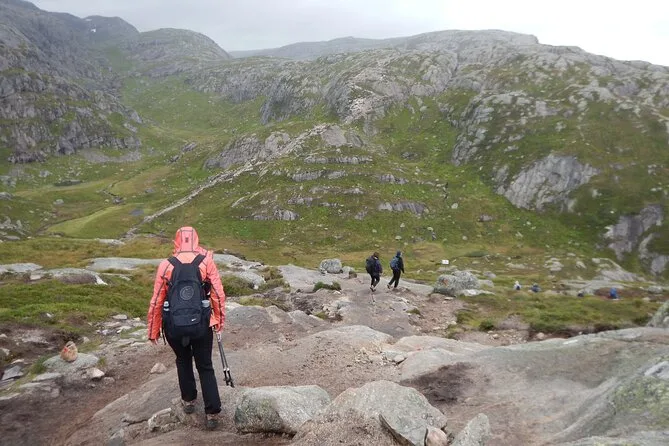
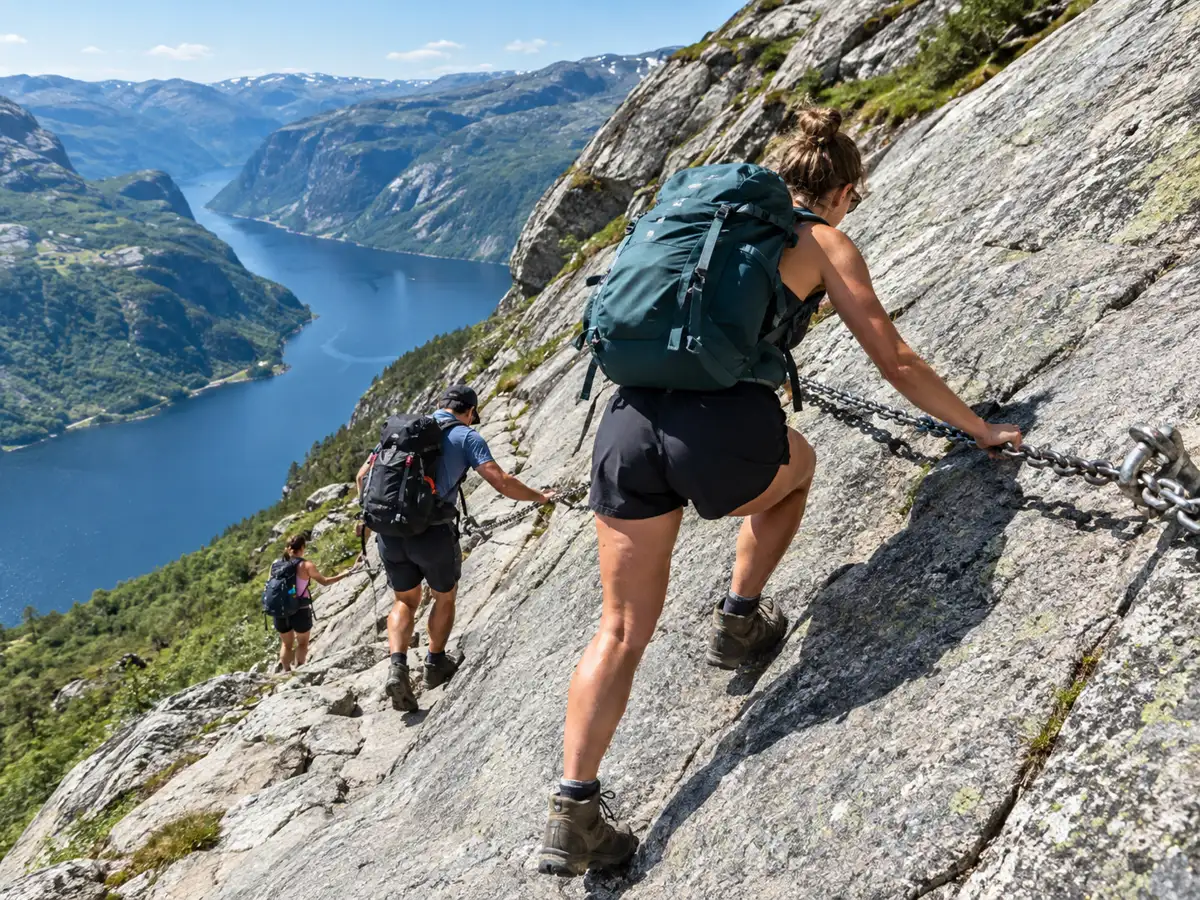
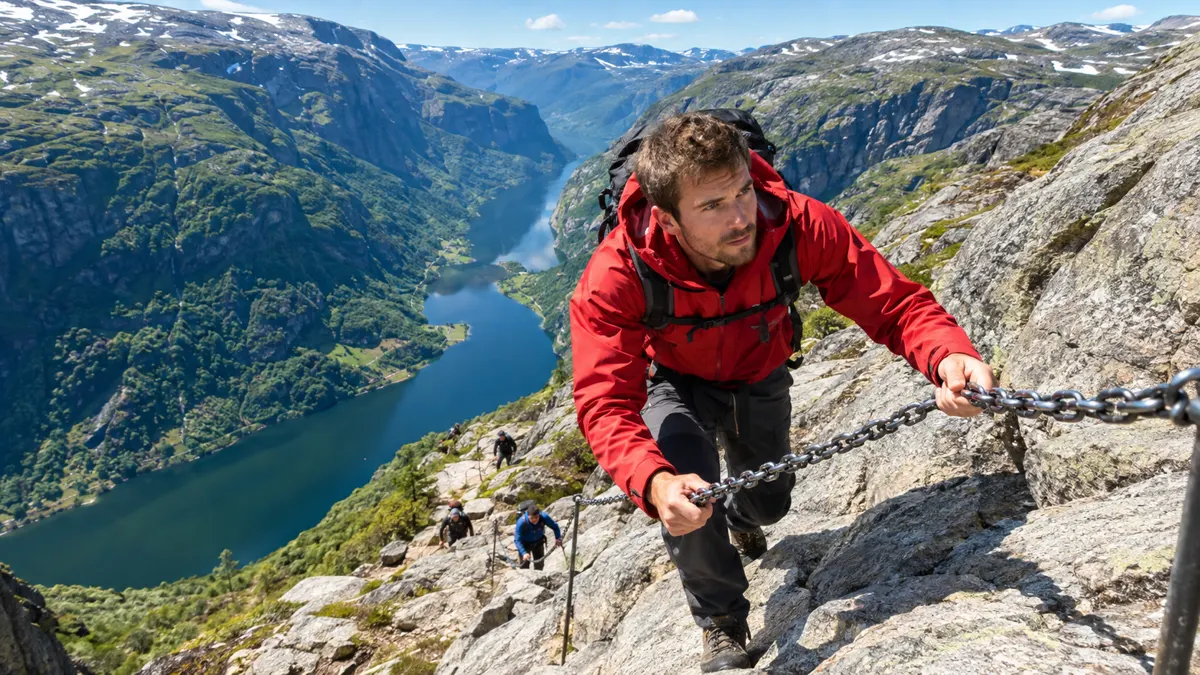
There is no warm-up. From the Øygardstøl car park, at about 640 metres, the first climb goes straight up a slab of
granite, with a chain bolted to the rock for the steepest part. At the top you drop into a valley, cross it and climb
again, steeper this time, out of Storedalen. A third climb lifts you onto the Kjerag massif, and then the trail turns
easy: a long, rolling plateau of bare rock, small pools and cairns, marked with red T signs, to the boulder at about
1,000 metres.
Fjord Norway puts it at about 11 km return, around 760 metres of climbing and six hours, and grades it red, demanding.
Most people take 5 to 7 hours. The part that catches visitors out is the return: you climb both valleys again, then
go down the chains facing the fjord, which is harder on the knees than going up.
Fixed chains run up the steepest slabs on all three climbs.
The boulder
Kjeragbolten is a lump of rock of about five cubic metres, wedged in a crack in the cliff since the ice melted at the
end of the last ice age. The drop below it is usually given as 984 metres. You reach it by a narrow ledge, and from
there it is one big step onto the top. In summer there is a queue, and a friend takes the photo from the ledge opposite.
No death from a fall off the boulder is on record. You don't have to step on it, and plenty of people don't.
Never do it in rain or wind: the granite turns slick. The cliff edges around it have no railings, so watch where you
stand while you wait. Our guide to standing on Kjeragbolten goes step by step.
The honest small print: no Lysefjord cruise from Stavanger reaches Kjerag. The sightseeing boats
and RIB safaris turn at Hengjanefossen, roughly halfway up the fjord, and the boulder can't be seen from the water anyway.
If a listing promises you Kjerag, it should include a hike.
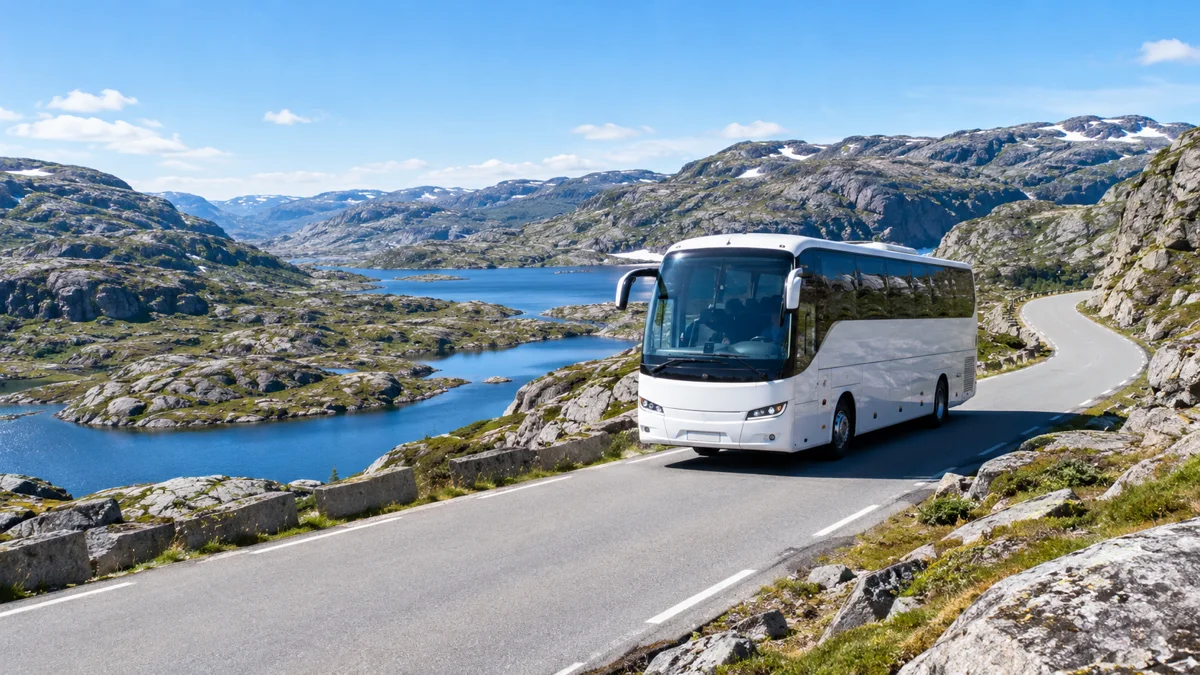
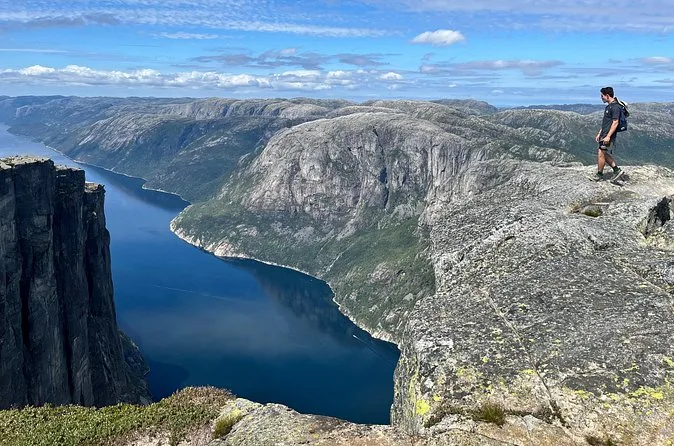
After the third climb the trail crosses an open plateau of granite and pools.
Getting there
Kjerag is the far end of the Lysefjord, and that makes the logistics the hard part. By road from Stavanger it is about
180 km inland through Sirdal, 2.5 to 3 hours each way, then the climb to Øygardstøl. In summer the Kjerag Express Bus
does the same run, out at 07:45 and back at 16:30, for NOK 995 return. The scenic way is by water: the car ferry from
Lauvvik takes 2.5 hours to Lysebotn, and a shuttle bus runs up the 27 hairpins to the trailhead.
A guided tour does the driving and the timing for you, and gives you someone who knows where the rock gets slippery.
Groups are small: eight at most with Lysefjorden Adventure and Fjord Hikes. Compare them in
Kjerag tours from Stavanger.
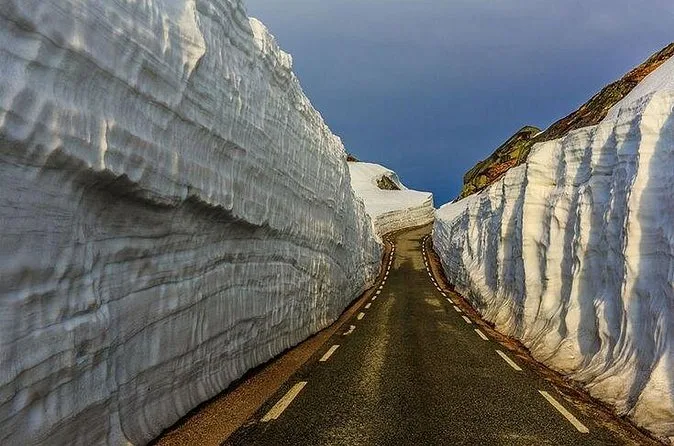
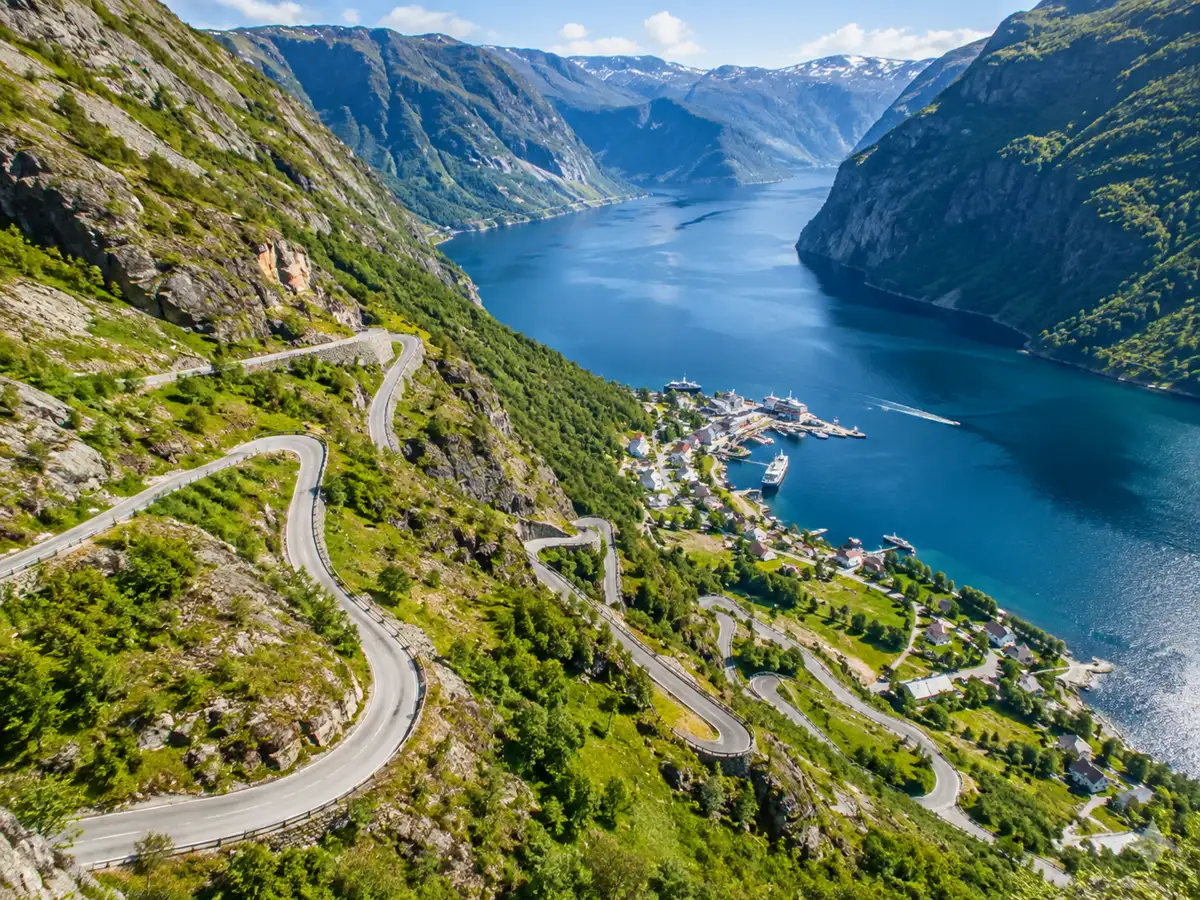
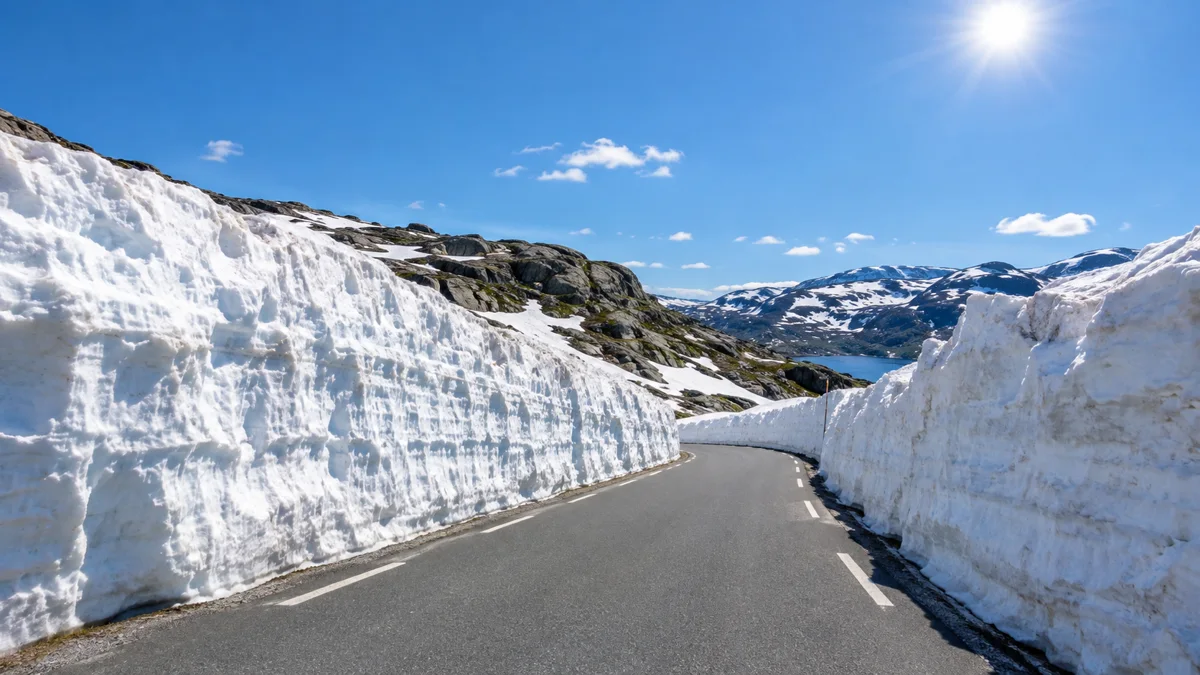
The Lysevegen road climbs from Lysebotn to the trailhead in 27 hairpins.
When to go
The window is short. The Lysevegen road usually opens in mid to late May and closes when the snow comes back in
autumn, and the express bus runs only from June to September. July and August are the safest months on the trail,
with long days. Late June can still have snow on the plateau. September is quieter and colder. Whatever the month,
check the mountain forecast, start early, and give yourself a spare day in case the fog sits on the plateau.
Straight answers to what people ask most about the Kjerag hike.
How hard is the Kjerag hike?
Hard for a day hike, and clearly harder than Preikestolen. It is about 11 km return with three steep climbs, several of them on bare granite with fixed chains, and roughly 750 to 800 metres of climbing in total, because you drop into valleys between the climbs and go up again on the way back. Fjord Norway grades it red, demanding. Read how hard Kjerag really is.
How long does the Kjerag hike take?
Plan on 5 to 7 hours on foot plus your time at the top; the official estimate is about 6 hours. From Stavanger the road adds 2.5 to 3 hours each way, which is why the guided tours run 9 to 11 hours door to door.
Do you need a guide for Kjerag?
Not in summer: the trail is marked with red T signs and chains are fixed on the steep parts. A guide earns the fee if you have no car, you are unsure of your fitness or the weather is mixed. Once snow arrives, the official advice is not to go without one. Guided day tours from Stavanger start at $214; see the tours compared.
Can you get to Kjerag without a car?
Yes, in summer. The Kjerag Express Bus leaves Stavanger at 07:45 and comes back at 16:30, NOK 995 return for adults, on set days from June to September. The other ways in are the car ferry to Lysebotn plus a shuttle up the hairpins, or a tour with pickup. All three in Kjerag without a car.
Can you see Kjerag from a Lysefjord cruise?
Not from the usual cruises out of Stavanger. The sightseeing boats and RIB safaris turn at the Hengjanefossen waterfall, well short of the fjord's far end where Kjerag stands above Lysebotn. Only the summer car ferry and the local Kolumbus boats sail that far, and the boulder itself cannot be seen from the water.
When is the Kjerag hiking season?
Roughly June to September. The Lysevegen road to the trailhead usually opens in mid to late May and closes for the winter in autumn, often by November, and the express bus runs only from June to September. Snow can lie on the plateau into June. See the 2027 season post.
Is it safe to stand on Kjeragbolten?
Stepping onto the boulder is optional, and plenty of hikers skip it. There is no recorded death from falling off it, and in dry, calm weather people queue on a ledge to step across. Leave it in rain or wind, when the granite turns slippery. More in standing on Kjeragbolten.
Kjerag or Preikestolen: which should I hike?
Preikestolen is shorter: about 8 km return and 4 hours of walking, much closer to Stavanger. Kjerag is about 11 km with three steep climbs, a longer drive and the boulder at the end. One day and average fitness: Preikestolen. A big day and a head for heights: Kjerag. Compare them in Kjerag vs Preikestolen.
How much does a Kjerag tour cost?
Guided day hikes from Stavanger on Viator start at $214 per person with transport. On your own, the express bus is NOK 995 return, and drivers pay about NOK 300 a day to park at Øygardstøl. Two-day trips with Pulpit Rock and Kjerag start at $1,077. Costs are broken down in Kjerag parking and costs.
Can children hike Kjerag?
Fit, sure-footed older children can, with an adult close by. The guided tours set their own limits (from 10 on the Fjord Hikes trip). It is a long day with chains and unfenced cliff edges, so it is no hike for small children; Preikestolen suits families better.
What should I wear to hike Kjerag?
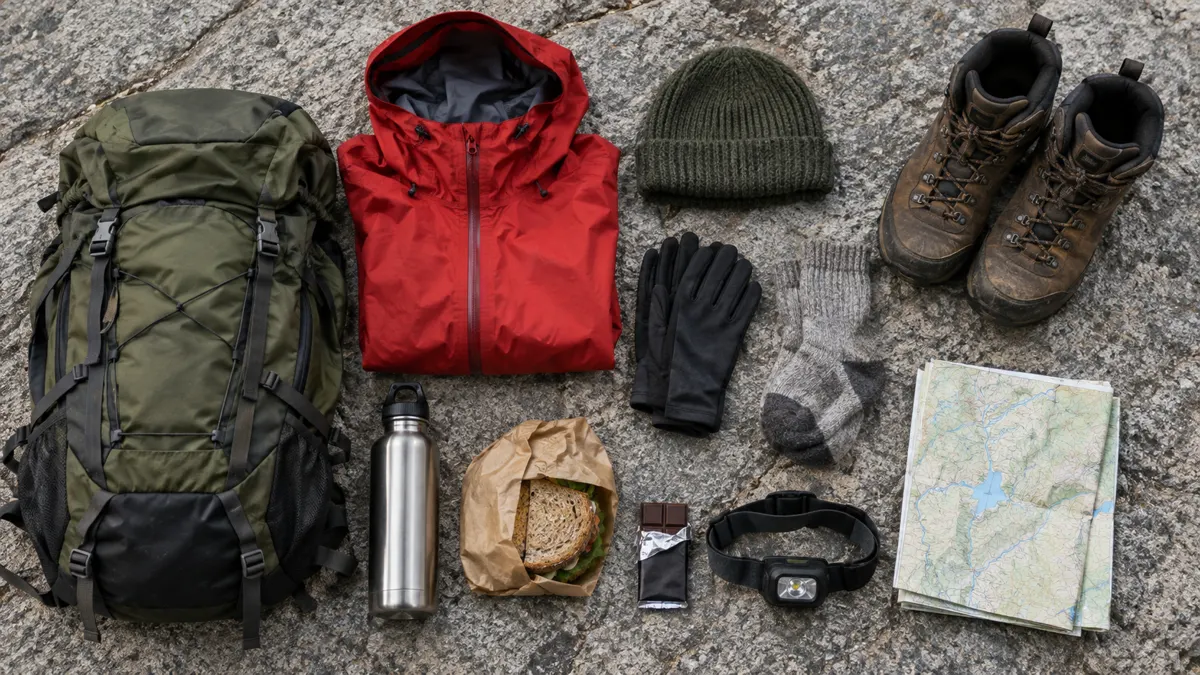
Hiking boots with good grip, a waterproof jacket, a warm layer, a hat and gloves for the cold chains, plus food and water for six hours. The plateau at about 1,000 metres is windy and much cooler than Stavanger, even in July. The full list is in what to wear for Kjerag.
Can I cancel a Kjerag tour?
Every day tour on this site cancels for a full refund up to 24 hours before the start; the three-day trip needs 3 days. Tours run in most weather, and if the operator calls a day off for safety, Viator offers a new date or a full refund.
Ready to book
Pick your day, pack your gloves.
Pickup in Stavanger, a guide on the chains and free cancellation up to 24 hours before on every day hike.

 Rated 5.0
★ 5.011 hoursFree cancellation